
Three-dimensional risk assessment applied to EV fire risk in residential buildings.
Originally published October 2024. Applies the risk framework from Why Is Operational Risk Classification Two Dimensional?
While I'm generally a big fan of technological innovations, I'll admit that I remain inherently sceptical of any major change which requires massive Government subsidies to proceed. That puts me on edge. If the concept is so fabulous, why do large wads of taxpayers' money need to be distributed to induce the uptake? Hence Government mandates, effectively forcing adoption of Battery Electric Vehicles, trigger my interest.
Here I've aggregated some recently released but not particularly surprising, excerpts from investigative reports which lead me to only one conclusion. Using the 20-20 retrospectoscope (conceptual rights held by Ian Hosegood AFAIK) there's going to be some unhappy Body Corporate Board members one day soon.
NSW Government has just released a report into the safety of Electric and Hybrid vehicle batteries. Read it here if you so desire: NSW Gov Report into Electric & Hybrid Vehicle Batteries.
If you've been following along in my critically acclaimed series Why is Operational Risk Classification 2 Dimensional? you'll be pleased to note the following good news.
Inter alia, the committee found "...that EV fires are relatively rare, and less common than internal combustion engine (ICE) vehicle fires."
Excellent systemic assessment, Likelihood is reduced.
Critically, the report didn't investigate the important contextual difference of when the fire occurs. For ICE vehicles, fires are more likely to occur when the vehicle is involved in a crash while in use on the road. Stats for EVs indicate that a significant portion of fires occur when the vehicle is parked.
Research sponsored by the Australian Federal Government found "...that just over a third of reported electric vehicle traction battery fires occurred while connected to energised AC or DC charging, or within one hour of being disconnected from energised charging."
Context is important. ICE fires don't generally start when the vehicle is just sitting around in a car park. So overall Likelihood is lower but location specific Likelihood might be higher. Hmm?
The Committee also heard "...that EV fires may require complex and protracted extinguishment and cooling."
"...that it could take between three and five hours to put out an EV battery fire."
"...that thermal runaway can produce high-intensity, jet-like directional flames."
"that EV fires can also result in the violent release of toxic, corrosive and potentially flammable vapours."
"...that vapour cloud explosion was a particular risk in enclosed or covered areas such as in garages or carparks."
Not so excellent then, Severity (or Consequence) is elevated (at least in situations like underground car parks such as under an apartment building for example).
Considering the case of underground vehicle parking below a residential apartment building where charging infrastructure is installed and in use, Likelihood is elevated as is Consequence. That doesn't seem like good news if you happen to have been involved in approving the installation of the charging systems.
Using the third dimension of Risk Assessment as outlined in the critically acclaimed series of articles Why is Operational Risk Classification 2 Dimensional?, being Frequency, is difficult in this case. Definitive geographic distribution of EVs is hard to source but from available published data, inner city Local Government Areas appear at or near the top of the list for each Australian state, implying that the car parks of inner city apartment blocks are increasingly occupied by EVs.
To localise the risk assessment to any individual inner city building then: Likelihood is elevated (particularly when charging infrastructure is available); Consequences are elevated; and, Frequency is increasing.
Let me run the hypothetical pre-mortem then. When there is an apartment building on fire, initiated by an uncontained EV fire/explosion at an underground parking charging station, who will be considered culpable for their contribution to the ensuing property and human damage? Causality and correlation have some weird relationship issues in a lot of populist reporting but Contribution and Culpability get their relationship validated post factum in a Court of Law.
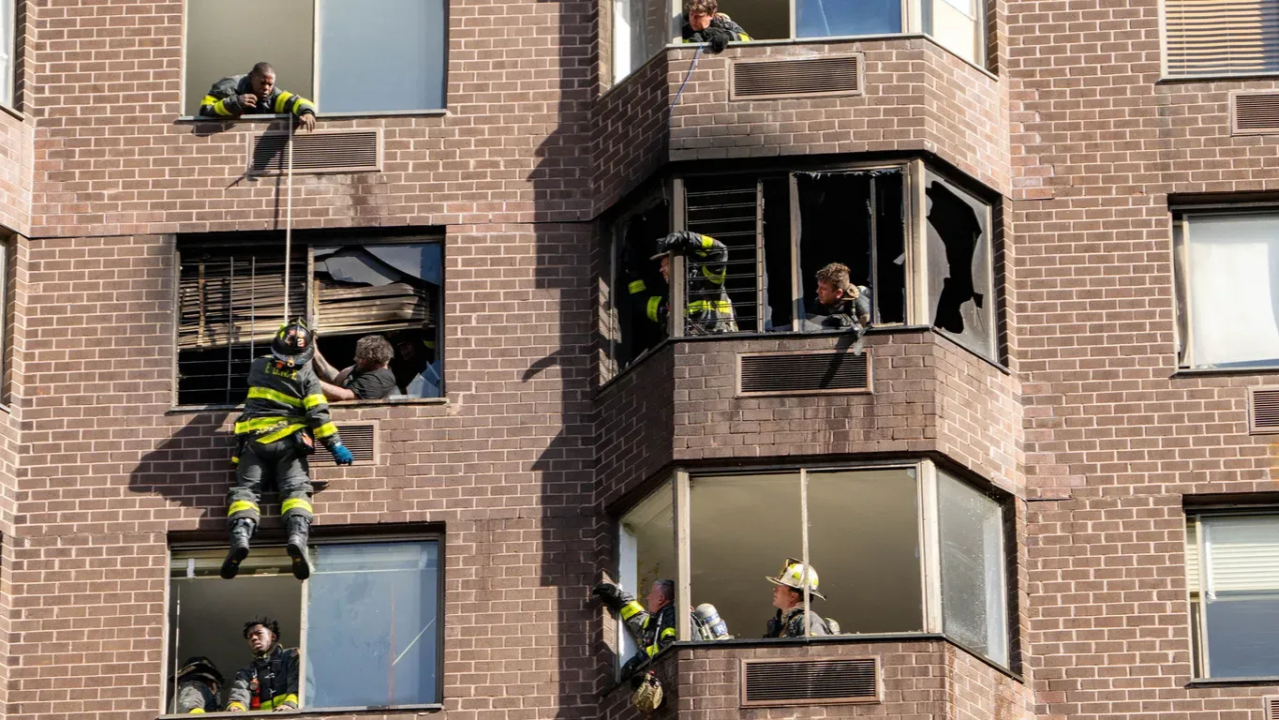
When there are publicly available expert reports with inflammatory language (see what I did there?) added to sensational media stories such as the one from Hangzhou below, it's a compelling case for a jury to chew over when contemplating contributory negligence.
Underground Parking Ban for EVs in China
I understand that this will trigger some sensitive folks who will accuse me of many different forms of wrong-think. Fundamentally, I'm not against EVs. They are fit for some purposes and use cases. If the market for vehicles were both free and fair, and the choice to purchase an EV or any other form of transport was left to individuals to make for themselves, I probably wouldn't pay them much attention. However, when they are increasingly present in inner city apartment buildings in part because of Government policy, and there is increasing pressure on Bodies Corporate to install charging infrastructure to support their use, there are some questions to address.
If I were on the Board of an apartment building Body Corporate I know which way I'd be voting on the motion to install EV charging facilities...
If you're grappling with risk governance challenges, I'd welcome the conversation.
Get in Touch